
Every year, thousands of small businesses launch full of passion and optimism. But within five years, half of them close their doors. While issues like poor cash flow or management play a part, one mistake silently drives many of these failures: not defining who their ideal customer really is.
If you’re trying to sell to everyone, this might be the wake-up call you need. Here’s why having an Ideal Customer Profile (ICP) matters and how to build one that becomes the backbone of your marketing and sales strategy.
What Exactly Is an ICP?
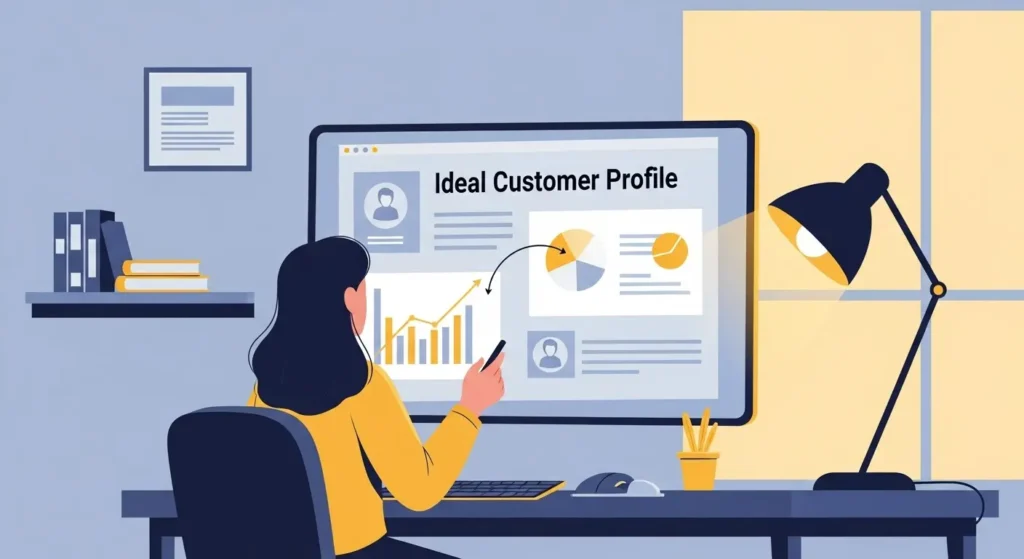
An Ideal Customer Profile describes the type of customer who gets the most value from your product or service and who, in turn, brings the most value to your business.
They buy faster, stay longer, refer others, and require less effort to keep happy.
An ICP goes far beyond a vague “target audience.” It includes:
- Demographics: age, income, occupation
- Firmographics: company size, industry, or revenue (for B2B)
- Psychographics: goals, values, and motivations
- Pain points: the problems they’re trying to solve
- Behavior: how and why they buy
Think of it as your guiding compass. Every decision, from your marketing message to your product roadmap, should align with this profile.
Why Businesses Fail Without One
1. You Waste Time and Money on the Wrong People
Without an ICP, marketing becomes guesswork. You spread your budget thin across random channels, hoping something sticks. The result: lots of clicks, few conversions, and campaigns that “look busy” but don’t deliver.
When you try to talk to everyone, your message connects with no one.
2. Your Leads Don’t Convert
If you’re constantly chasing unqualified leads, the problem likely isn’t your sales process. It’s your targeting. Without clarity on who your best customers are, you fill your pipeline with mismatched prospects. They eat up your time, lower your close rate, and drive up your cost per acquisition.
3. Your Product Loses Focus
Businesses that skip the ICP step often build products for everyone and end up delighting no one. They chase random feature requests instead of solving one clear problem for a defined group. Over time, this leads to bloated products and confused customers.
4. Your Messaging Sounds Generic
Ever visited a website that says “We help businesses grow”? You probably left immediately. That’s what happens when you don’t know who you’re speaking to.
Strong ICPs create strong messaging that speaks directly to specific pain points in your audience’s language.
5. Your Teams Fall Out of Sync
Sales wants one type of lead, marketing attracts another, and support deals with unhappy customers who were never the right fit.
A shared ICP aligns everyone so marketing attracts the right prospects, sales converts them faster, and support can keep them satisfied long-term.
Why Many Small Businesses Avoid It
Defining your ICP feels limiting, and that’s exactly why many owners skip it. They fear that narrowing their audience means losing opportunities. But the truth is the opposite: focus creates growth.
You can always accept clients outside your ideal profile, but your marketing should concentrate on the ones most likely to buy, stay, and refer.
Another reason small businesses avoid ICP work is lack of data. Many rely on gut instinct instead of real evidence. But even basic CRM data, surveys, or customer interviews can uncover patterns that guide you toward your best-fit clients.
What Happens When You Get It Right
When you define your ICP clearly, everything starts working better.
Marketing becomes more efficient. You stop wasting money on broad, unfocused ads and start speaking directly to those most likely to buy.
Sales cycles shrink. Your team spends time with high-quality prospects instead of chasing leads that go nowhere.
Personalization becomes natural. You can tailor offers and content to specific motivations.
Your product improves. You prioritize the right feedback and build features that actually matter.
Customer lifetime value grows. Ideal clients stay longer, buy more, and happily refer others.
Businesses that operate around a clear ICP typically see higher conversion rates, stronger ROI, and more predictable growth.
How to Create Your Ideal Customer Profile
You don’t need a marketing degree or a data science team. Just follow these steps.
1. Start With Your Best Customers
Look at your happiest, most profitable clients.
Ask yourself:
- Who gets the best results from what you offer?
- Who buys quickly and sticks around?
- Who refers others or provides testimonials?
List the common traits they share such as industry, company size, role, personality, pain points, and goals. This is your foundation.
2. Spot the Patterns
Use your CRM or client list to identify similarities like company size, location, budget range, decision-maker type, or specific challenges.
You’ll quickly see clusters that reveal who your true ideal customers are.
3. Do Some Research
If you don’t have many customers yet, study competitors, talk to prospects, and use online data tools. Industry reports, LinkedIn searches, and even Google Trends can show where demand exists.
4. Get Specific and Stay Focused
This is where most stop too soon. “Small businesses” is not an ICP.
“Local accounting firms with 5–15 employees that need help automating client onboarding” is.
The narrower your focus, the easier it becomes to stand out and close deals.
5. Document It Clearly
Create a one-page summary your whole team can reference. Include:
- Basic traits (industry, size, role)
- Main pain points
- Key motivations
- Buying triggers
- Red flags (who not to target)
This isn’t just a marketing exercise. It’s a decision filter for your entire business.
6. Test and Refine
Put your ICP into action through your campaigns and track what happens.
Are you attracting better leads? Closing faster? Retaining longer?
Adjust as you learn. Your ICP should evolve as your business and market do.
Common Mistakes to Avoid
- Going too broad and trying to include everyone.
- Basing it on assumptions instead of data.
- Ignoring insights from your team.
- Focusing only on demographics and ignoring motivations.
- Treating it as something static rather than evolving.
Real-World Example
When payroll software company Gusto launched, they didn’t target “small businesses.” They focused narrowly on California-based companies with fewer than five employees and no benefits program.
That hyper-specific ICP allowed them to serve their niche perfectly and then expand gradually. Today, Gusto supports hundreds of thousands of businesses across the U.S. That’s the power of focus.
Final Thoughts
Defining your Ideal Customer Profile isn’t just a marketing task. It’s a survival skill.
Without one, you’ll burn money on unqualified leads, chase the wrong customers, and dilute your brand. With one, your marketing clicks, your sales flow, and your business grows sustainably.
The question isn’t whether you can afford to create an ICP. It’s whether you can afford not to.
Start now. Look at your best customers. Find the patterns. Get specific. Write it down.
Your business’s future depends on it.
 English
  Portuguese